Light, privacy, insulation and fit, compared side by side
Roller, zebra and cellular shades all cover a window, and all three can be motorized, cordless and child-safe. The difference is what happens to the light, and what happens to the heat.
This guide walks through light control, privacy, insulation, fabric openness and room-by-room fit, so the shortlist is down to one system before you speak to a dealer. It is written for homeowners choosing shades for a home, and for designers and builders specifying them for a project.
The one-line version. Choose roller for a clean treatment with the widest fabric range, zebra when you want to switch between filtered daylight and privacy without fully closing the shade, and cellular when insulation, sound or blackout performance is the priority. The rest of this page is how to tell which of those describes your project.
Fabric books and specifications Full fabric ranges and specifications for each system, as printable PDFs.
Alternating sheer and solid bands on a continuous loop
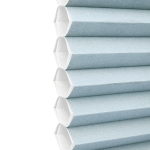
Honeycomb cells that trap air
Light control
Fixed by the fabric you choose
Adjustable without closing: align the sheer bands to filter, offset them to block
Fixed by the opacity you choose; Day & Night puts two fabrics in one shade
Opacity range
Transparent, translucent, privacy, blackout, plus sunscreen fabrics rated by openness
Opaque, Privacy, Translucent, Transparent
Opaque, Privacy, Transparent, Sheer
Insulation
Fabric-dependent
Fabric-dependent
The strongest of the three
Widths
Set by fabric width and motor choice, confirmed by your dealer
12 to 96 in. cordless, from 15 in. motorized, 72 in. max for no-drill
Signature option
Cassette or fascia wrapped in the shade fabric
Wide or narrow bands
Day & Night, and no-drill installation
How each one works
Roller
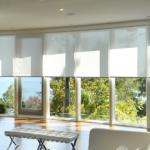
The simplest mechanism in shading: one flat panel on a tube. Everything the shade does, from how much light passes to whether the room darkens, comes from the fabric rather than the mechanism. That is why roller carries the widest fabric range, and why hardware is where the aesthetic decision sits: open roll, curved or square cassette, or fascia, in an aluminum finish or wrapped in the shade fabric.
Interlude zebra
Two fabrics in alternating bands, sheer and solid, moving past each other as the shade operates. Align the sheer bands and filtered daylight comes through with a softened view out; offset them so the solid bands meet and the shade closes for privacy. It is the only one of the three where light control is a continuous adjustment rather than a decision made months earlier at order time. Bands come in two sizes: wide for larger windows, narrow for standard ones.
Cellular
Honeycomb cells hold a pocket of still air between the room and the glass. That trapped air is the point: it is what insulates, and the same structure absorbs sound. Single Cell is the classic honeycomb; Cell-in-Cell is double-layered for higher energy efficiency and blackout options. Cellular also carries the practical extras: Day & Night in one shade, no-drill installation for rentals and delicate surfaces, UV blocking, a dust-resistant treatment, and PVC-free materials.
Light and privacy: the short version
Two things decide this, and only one of them is about the shade.
Do you want the answer fixed or adjustable? Roller and cellular give one answer, chosen at order time and delivered precisely. Zebra gives both answers from one shade, at the cost of the perfectly even glow a single translucent panel produces. The banding is visible, and it is worth seeing in person before committing.
Which side is brighter? Privacy is not a property of the fabric alone. A fabric that keeps you invisible in daylight can turn transparent after dark, once the room is lit and the street is not. Street-facing ground floors and bathrooms should be specified for night-time conditions, not daytime ones.
In a Canadian climate this is the tiebreaker on any window that faces the weather. Cellular is the system built for it: the cell structure traps air, which helps hold indoor temperature and reduce energy costs, and Cell-in-Cell layers cells for more of the same. The honeycomb also absorbs sound, which is why cellular turns up in bedrooms on busy streets and in home offices.
Roller and zebra manage solar heat rather than conducted heat. They intercept sunlight before it becomes heat in the room, which matters most on south and west elevations in summer. The two approaches solve different halves of the problem, and a common split on one project is cellular in the coldest rooms and roller everywhere else.
The energy story in full, including UV protection and metalized backing fabrics, is in the Energy Efficiency Guide.
Fabric openness, in actual numbers
Openness factor is the percentage of a fabric's surface that is open weave rather than solid. It is the most useful number in a shade specification, because it sets view-through, glare control and daytime privacy at once, and Sun Glow's sunscreen fabrics publish it directly:
Openness
Sunlight blocked
What that means in the room
0%
100%
No view through the fabric; the closest a sunscreen gets to a privacy fabric
1%
99%
Glare control on the harshest exposures, view largely given up
3%
97%
The common specification: usable view, strong glare control
5%
95%
More view, noticeably less privacy after dark
10%
90%
Maximum view; treat as a daytime-only privacy fabric
Fabrics outside the sunscreen range are specified by opacity category instead, from transparent through translucent and privacy to opaque or blackout, because a blackout fabric has no openness to quote. Interlude fabrics follow the same four categories, applied to the solid bands.
If you take one thing to a dealer meeting, take the openness or opacity you want per room. Browse the range on the fabric collection page.
Size limits that eliminate options early
Survey the smallest and the largest opening before choosing a system. One of them usually removes an option for you.
Cellular
Minimum width
Maximum width
Cordless
12 in.
96 in.
Stealth motorized
15 in.
96 in.
Somfy motorized
18 in.
96 in.
No-drill installation
12 in.
72 in.
Maximum drop on cellular is 96 in. across the range. Roller and Interlude are not limited to one published figure the same way: what a roller shade can span depends on fabric width, tube size, hardware and, if it is motorized, the motor. Send your dealer the width, drop and fabric for any oversized opening and have it checked before the design is fixed.
Room by room
Room
What it needs
Best fit
Also works
Primary bedroom
Darkness, quiet, warmth in winter
Cellular, Cell-in-Cell blackout
Blackout roller with side channels
Nursery
Darkness plus child safety
Cordless or motorized cellular
Roller with Safety Shield or NEO Chainless
Living room
Glare control without losing the view
Zebra, or a 3% sunscreen roller
Cellular in a Transparent opacity
Kitchen
Easy cleaning, reach over counters
Roller in an easy-care fabric
Motorized anything above a counter
Home office
Screen glare control, quiet
Zebra for adjustable glare
Cellular for sound absorption
Bathroom
Privacy day and night
Privacy-opacity roller
Cellular in a Privacy opacity
Dining and feature windows
Appearance, view preservation
Roller with a fabric-wrapped cassette
Zebra
North-facing rooms
Heat retention over glare control
Cellular
-
South and west exposures
Solar heat and fading control
Low-openness sunscreen roller
Cellular with UV blocking
Rentals
No permanent fixings
Cellular, no-drill
-
Controls and motorization
All three can be operated without a chain, and all three can be motorized, so controls rarely decide the shade type. They do decide the experience, and one detail decides the order.
Roller and Interlude share Sun Glow's control range: a chain with the Safety Shield child-safety device, the Zero Gravity weight-balancing spring for oversized or dense shades, and the cordless NEO Chainless System. Both accept Stealth motors.
Cellular runs cordless, or on its own Stealth motors: a 0.6 Nm motor for single cellular and a 0.8 Nm Dual motor for Day & Night, powered by battery, direct plug or a distribution box.
Either way, decide before ordering. Motors are specified with the shade and cannot be added to a finished shade later. The Motorization Guide covers the choice in full.
What drives the price
Sun Glow shades are made to order and sold through dealers, so the number comes from your dealer. What is worth knowing is which decisions move it, in roughly descending order:
Size and quantity. Width drives fabric, tube and motor selection together; a handful of oversized windows can outweigh a house full of standard ones.
Motorization. The largest single line item on most projects, and the one with real tiers.
Fabric. The range runs from straightforward everyday fabrics to specialty and designer lines; performance and blackout constructions sit above standard translucents.
Construction. Cell-in-Cell sits above Single Cell; Day & Night combines two fabrics in one shade.
Hardware. Open roll is the entry point; cassettes and fascias add cost, and a fabric-wrapped cassette adds more than a plain aluminum finish.
Extras. Side channels for true room darkening, specialty shapes, control accessories.
A workable way to frame a budget: fix the fabric and opacity per room first, decide which openings genuinely need motorization second, and treat hardware finish as the adjustable line. Fabric and motor choices are permanent; a cassette upgrade is the easiest thing to trade off.
What to bring to your dealer
A room-by-room list of windows with rough width and height, including the narrowest and the widest.
What each room needs: darkness, privacy, glare control, warmth, or appearance.
Which windows are hard to reach or too numerous to operate daily.
Whether you want the view preserved during the day, and the openness or opacity you have in mind.
Inside or outside mount, and reveal depth where you know it.
Anything the shades have to match: trim colour, other treatments, a smart-home platform.
See the fabrics before you decide
Openness, colour and the look of a zebra band all read differently in a sample than on a screen. Sun Glow dealers across Canada provide personalized consultations, expert installation and reliable after-sales support.
Sun Glow Window Covering Products of Canada Ltd. - Canada's precision window shade manufacturer. Product details on this page are drawn from Sun Glow product documentation and are subject to change; confirm current specifications with your dealer at order time.
A decision guide for choosing between roller, Interlude zebra and cellular shades. It compares construction, light control, insulation and size limits, explains fabric openness in published numbers, and gives room-by-room recommendations and the questions to bring to a dealer.
Frequently Asked Questions
What is the difference between roller and zebra shades?
A roller shade is a single piece of fabric on a tube, so its light control is fixed by the fabric chosen at order time. A zebra shade uses alternating sheer and solid bands: aligning the sheer bands filters daylight, and offsetting them brings the solid bands together for privacy.
Which window shade is best for insulation?
Cellular shades. The honeycomb cell structure traps air, which helps hold indoor temperature and reduce energy costs, and the Cell-in-Cell construction layers cells for more of the same. The same structure also absorbs sound.
Do zebra shades give privacy at night?
With the bands offset so the solid sections meet, a zebra shade closes for privacy. How much light it blocks depends on the Interlude fabric chosen, which comes in Opaque, Privacy, Translucent and Transparent categories.
What is openness factor?
Openness factor is the percentage of a fabric surface that is open weave rather than solid. Lower openness means more privacy and less view; higher openness means more view and less privacy. Sun Glow sunscreen fabrics are available in 0%, 1%, 3%, 5% and 10% openness, blocking 100%, 99%, 97%, 95% and 90% of sunlight respectively.
Which openness should I choose?
A 3% openness is the common specification: it keeps a usable view while giving strong glare control. Go lower on harsh south and west exposures, and treat 10% as a daytime-only privacy fabric because the view reverses after dark once the room is lit.
How wide can cellular shades be?
Cellular shades run from 12 inches wide cordless, 15 inches with a Stealth motor and 18 inches with a Somfy motor, up to 96 inches wide and 96 inches long. No-drill installations are limited to 72 inches wide.
Which shades work in a rental?
Cellular shades offer a no-drill installation intended for rentals and delicate surfaces, up to 72 inches wide. Nothing is screwed into the window frame.
Can roller, zebra and cellular shades all be motorized?
Yes. Roller and Interlude shades accept Stealth motors, and cellular shades use their own Stealth motors, 0.6 Nm for single cellular and 0.8 Nm for Day and Night. Motorization is specified with the shade at order time and cannot be added to a finished shade later.